Rebound Hammer test is a Non-destructive testing method of concrete which provide a convenient and rapid indication of the compressive strength of the concrete. The rebound hammer is also called as Schmidt hammer that consist of a spring controlled mass that slides on a plunger within a tubular housing.
The operation of rebound hammer is shown in the fig.1. When the plunger of rebound hammer is pressed against the surface of concrete, a spring controlled mass with a constant energy is made to hit concrete surface to rebound back. The extent of rebound, which is a measure of surface hardness, is measured on a graduated scale. This measured value is designated as Rebound Number (rebound index). A concrete with low strength and low stiffness will absorb more energy to yield in a lower rebound value.

Correlation between compressive strength of concrete and rebound number :
The most suitable method of obtaining the correlation between compressive strength of concrete and rebound number is to test the concrete cubes using compression testing machine as well as using rebound hammer simultaneously. First the rebound number of concrete cube is taken and then the compressive strength is tested on compression testing machine. The fixed load required is of the order of 7 N/ mm2 when the impact energy of the hammer is about 2.2 Nm.
The load should be increased for calibrating rebound hammers of greater impact energy and decreased for calibrating rebound hammers of lesser impact energy. The test specimens should be as large a mass as possible in order to minimize the size effect on the test result of a full scale structure. 150mm cube specimens are preferred for calibrating rebound hammers of lower impact energy (2.2Nm), whereas for rebound hammers of higher impact energy, for example 30 Nm, the test cubes should not be smaller than 300mm.
Interpretation of Rebound Hammer Test Results :
After obtaining the correlation between compressive strength and rebound number, the strength of structure can be assessed. In general, the rebound number increases as the strength increases and is also affected by a number of parameters i.e. type of cement, type of aggregate, surface condition and moisture content of the concrete, curing and age of concrete, carbonation of concrete surface etc.
As such the estimation of strength of concrete by rebound hammer method cannot be held to be very accurate and probable accuracy of prediction of concrete strength in a structure is ± 25 percent. If the relationship between rebound index and compressive strength can be found by tests on core samples obtained from the structure or standard specimens made with the same concrete materials and mix proportion, then the accuracy of results and confidence thereon gets greatly increased.
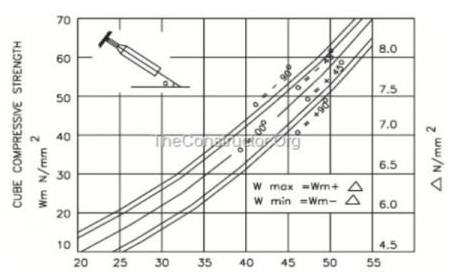
Table.2. Quality of Concrete for different values of rebound number
