Welder Qualification Test
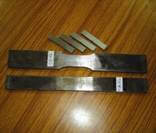
The tests for welded structures are :
- Visual inspection
- Perentrant inspection
- Magnetic particle inspection
- Radiography
- Ultrasonic inspection
- Macro Examination
- Mechanical testing
- Tensile Strength
- Bend test
- Side Bend test
- Hardness in HV (Parent Metal, HAZ, Weld)
- Fracture test
- Welder procedure specification (WPS) tests
- Procedure qualification records (PQR) tests
Visual Inspection
Visual techniques are widely used to ensure product reliability during Manufacturing and to examine any gross discrepancies on the surface of operation components. These techniques involve illumination of object surface with light and examination of the reflected light using visual aids, usually at magnification.
Penetrant Inspection
Dye penetrant inspection (DPI), also called liquid penetrant inspection (LPI), is a widely applied and low-cost inspection method used to locate surface-breaking defects in all non-porous materials.
Magnetic Particle Inspection
Magnetic particle inspection processes are non-destructive methods for the detection of surface and sub-surface defects in ferrous materials. They make use of an externally applied magnetic field of electric current through the material, and the principle that the magnetic flux with leave the part at the area of the flaw.
Magnetic Particle Inspection
Magnetic Particle inspection processes are non-destructive methods for the detection of surface and sub-surface defects in ferrous materials. They make use of an externally applied magnetic field or electric current though the material, and the principle that the magnetic flux will leave the part at the area of the flaw.
Radiography
This technique involves the use of penetrating gamma or x-radiation to examine parts and products for imperfections. An X-ray machine or radioactive isotope is used as a source of radiator. Radiator is directed through a part and onto film or other media. The resulting shadowgraph shows the internal soundness of the part. Possible imperfections are indicated as density changes in the film in the same manner as X-ray shows broken bones.
Ultrasonic Inspection
Ultrasonic inspection can be used for flaw detection / evaluation, dimensional measurements, material characterization, and more
Macro Examination
Macro examination is the procedure in which a specimen is etched and evaluated macro structurally at low magnifications. Macro examination is a frequently used technique for evaluating steel products such as billects, bars, booms and forgings.